The Pantomimist – Amiran Shalikashvili Junior
The story of Amiran Shalikashvili’s Pantomime Theatre turned out to be far more interesting than I had anticipated, and unexpectedly sad. We spoke about many things: pantomime as a way of life, the current state of the theatre and plans for its modernization, his father’s legacy, and the future of Georgian pantomime.
What was your first time on stage like? What was the theatre like back then?
Amiran Shalikashvili Jr.:
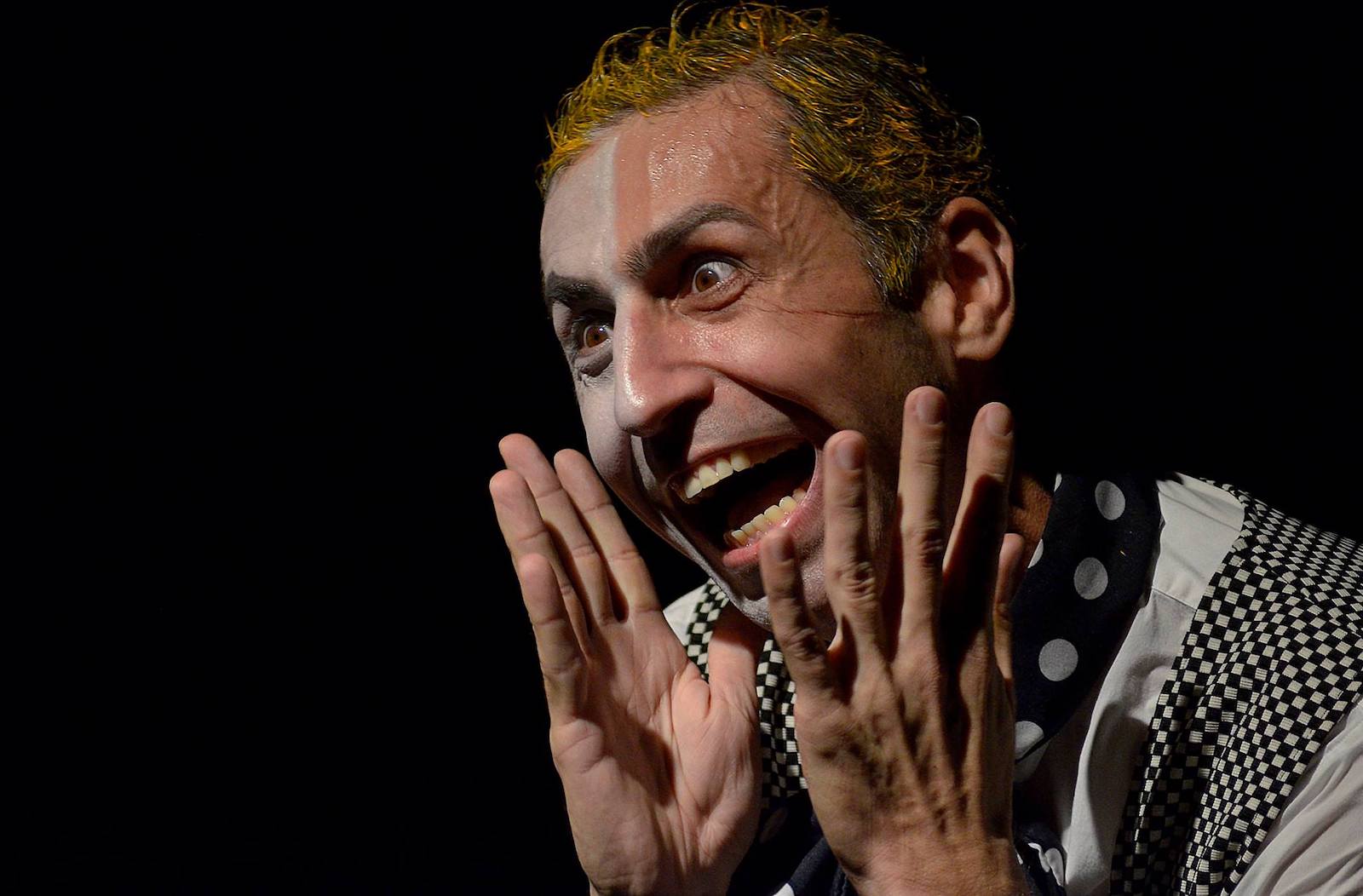
I started when I was thirteen, and I’ve been doing this ever since. It was the 1990s, and honestly, I entered the theatre by accident. After 1992, the entire country was in chaos, and the theatre was no exception. In 1996, my father decided to start everything from scratch. He put us, his family, on stage, and we began working. Over time, I got into it, and as you can see, I’m still here.
What sparked your interest?
Amiran Shalikashvili Jr.:
At first, I didn’t even fully understand where I was. School was my main focus, but the theatre turned out to be so engaging that it gradually pulled me in. From 1996 to 2005, I didn’t receive a single role.
I played my first leading role in Terenti Graneli in 2005. For more than an hour, I was in shock. I remember people crying openly. That’s when I started performing serious roles.
After that came roles like Saint George and Christ. Eventually, my father staged The Knight in the Panther’s Skin, and I began receiving different parts. The sad part is that I was also forced to take on administrative responsibilities, which don’t interest me much.
What did your father, Amiran Shalikashvili, contribute to pantomime theatre?
Amiran Shalikashvili Jr.:
My father revolutionized European pantomime itself. Traditionally, European pantomime is minimalistic, usually involving two or three performers.
Even Marcel Marceau attended our performances and said there was nothing like it anywhere in the world. Georgian pantomime is national and collective in nature.
My father staged large-scale productions with 20 to 30 performers. He also filmed poetic works and plays such as Pirosmani and Kidevac Daizrdebian. He created unique Georgian movement techniques that were later adopted in countries like the US and Russia.
He disliked decorations and elaborate costumes. Sometimes he would place a single black cube on stage to shift attention to the actor’s emotions, and nothing more.
European pantomime began as street art, with performers using white makeup. My father rejected this approach to preserve the raw expressiveness of the face. His work was deeply dramatic, shaped by personal history, including the burning and theft of his theatre.
A burnt theatre?
Amiran Shalikashvili Jr.:
Yes. The day after Shevardnadze granted the building to my father, it was burned down deliberately to force him out. At that time, no one wanted a functioning theatre.
Now I feel I’ve reinforced our slogan: “We are building a theatre.” It’s still a difficult period, but I decided this theatre must not stop.
Rebranding will happen eventually, and the image will change. My goal is to preserve my father’s classics while giving audiences access to them, but also to embrace modern culture and move forward.
What does modern theatre mean to you?
Amiran Shalikashvili Jr.:
Live music, for example. A theatre with its own band. I want to stage my father’s plays with an orchestra. I’m also exploring new movement directions and plan to involve acrobatics and ballet. That’s why we need a large stage.
My father’s work was unique, which makes innovation difficult. If you touch the classics carelessly, you can ruin them, and new works may not reach the same level. He began an entirely new era that deserves global recognition.
Even today, we survive largely thanks to his legacy, but it’s time to move forward and attract younger audiences.
Which play was the most successful?
Amiran Shalikashvili Jr.:
An artist may have favorites, and my father had many. Our main production remains Stumar-Maspindzeli. It features Georgian chokha, khabalakhi, traditional music, and national spirit. When a new student joins this play, we say, “You’ve been baptized in Georgian pantomime.”
Do many new artists apply to join the theatre?
Amiran Shalikashvili Jr.:
When we received 78 applications last year, I realized interest was growing. Still, problems remain. I run a children’s studio, and parents often visit first. When they see the deteriorating space, many turn around and leave.
But pantomime is a healthy way of life. I had scoliosis. Doctors said it couldn’t be fixed, but after years of training, my back straightened. Even the doctor was shocked.
How demanding is pantomime as an art form?
Amiran Shalikashvili Jr.:
In traditional theatre, actors rehearse around a table. Our rehearsals involve four to five hours of physical training. Performers must stay in peak condition. Missing even a day affects the performance.
Pantomime is useful for everyone. Singers and drama actors can benefit from it. Look at Jim Carrey or Mr. Bean. They use pantomime language instinctively.
Your slogan says, “We are building a theatre.” What kind of theatre?
Amiran Shalikashvili Jr.:
Development requires proper technical infrastructure: lighting, sound, space. Our current stage is too small. Four actors fill it completely.
We need a new theatre. A 21st-century space should be flexible. One day it might have stalls, the next day tables and chairs, or nothing at all. Another day it could host a DJ. I want a theatre of that level, with a large stage for an orchestra.
What does the government think about this?
Amiran Shalikashvili Jr.:
I don’t know, but Kakhi and I are committed. We’re opening the 55th season. The founders are gone; only the younger generation remains.
The building was sold under the previous administration. That’s why I keep an office on Rustaveli Avenue. When they pass by, they’ll see me and remember.
Selling the theatre was wrong. At the very least, we should have been relocated. Eventually, a new mayor returned the space, but the result was an illusion of a theatre. Corruption runs deep. This country needs this theatre. My father never wanted it named after him. He said, “Just mention me as the founder somewhere below.” This theatre belongs to the country.
Where do you plan to build the new theatre?
Amiran Shalikashvili Jr.:
Outside the city, near Lake Lisi, for example. Somewhere without noise restrictions. We wouldn’t perform every day, maybe twice a week. The rest of the time would be dedicated to rehearsals.
People will come. They travel to the Black Sea Arena and will come here if we do things right. Shalikashvili’s ideas may seem unrealistic, but we will prove this theatre must be built.
What is needed for that?
Amiran Shalikashvili Jr.:
Land and permission to build. Not money. In 2015, I received an international center license signed by representatives from 40 countries, stating that Georgia should host an international pantomime center.
Once we have land, everything will start immediately. We’ll accept local students and invite young people from Europe. It will benefit tourism and promote Georgian culture.
Do you prefer directing or acting?
Amiran Shalikashvili Jr.:
Acting. I hate directing. But I’m doing a master’s degree, so I have to learn it. I’ve been offered scripts, but it’s too early. First, I need to build a theatre.
How difficult is it to play a role? What helps you?
Amiran Shalikashvili Jr.:
It’s hard to explain. If I don’t believe in the character, the audience won’t either. I must truly believe that I am Terenti Graneli, writing poetry in a graveyard.
When I step on stage, the real world stops existing.
By Ana Mikatadze

Guest Author
We're here to celebrate the spirit of our city and its dwellers and share their stories with visitors and amongst ourselves.