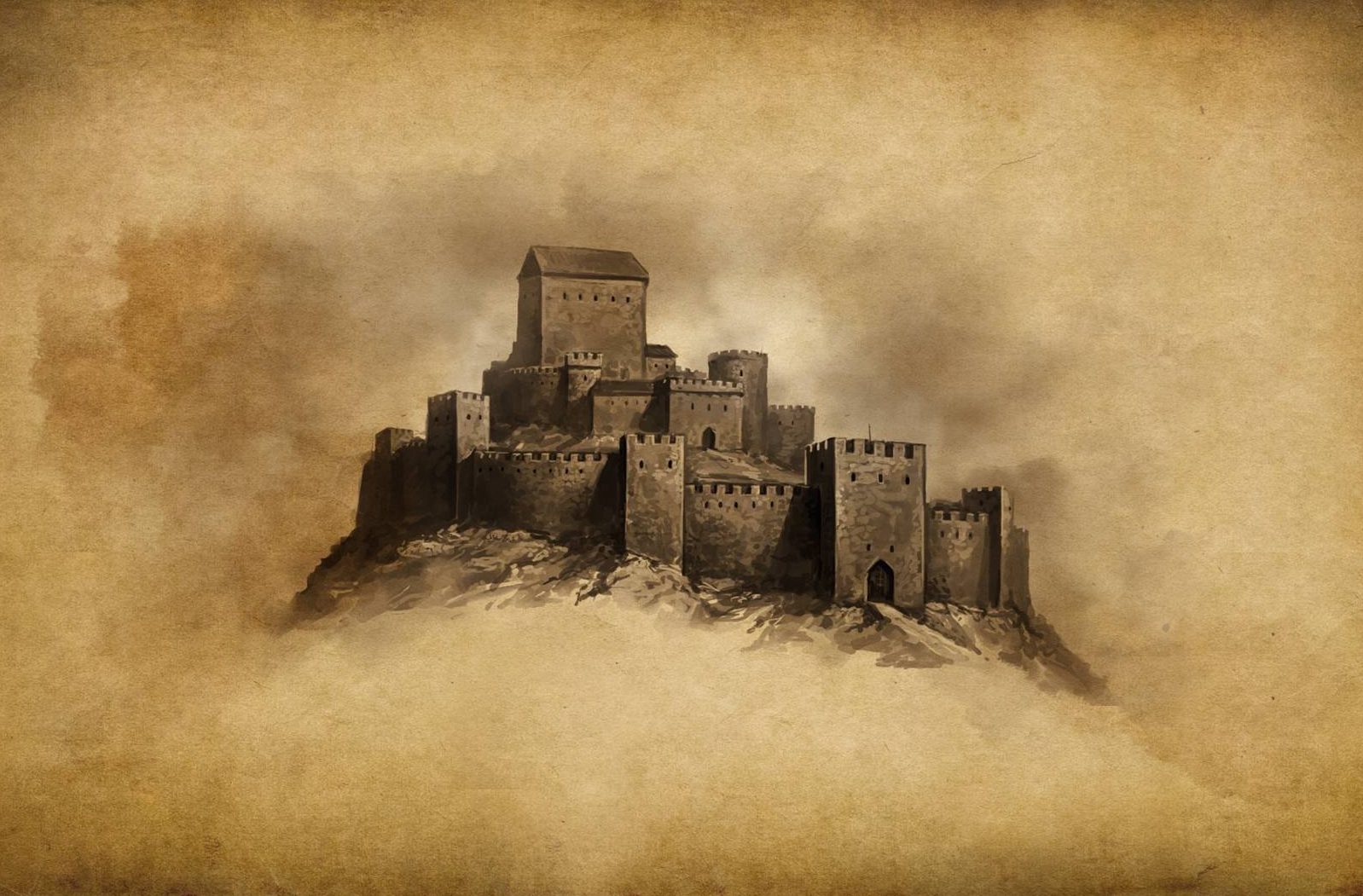
The Making of Georgia
“I can only note that the past is beautiful because one never realizes an emotion at the time. It expands later, and thus we don’t have complete emotions about the present, only about the past.”
— Virginia Woolf
Internal and External Status Quo
The 10th century is one of the most important stages in the history of Georgia, which throughout its long existence has always shown a tendency toward unification, accompanied by a nonetheless persistent separatist spirit. This cultural dissonance resulted in repeated attempts to knit the kingdom together, but these almost always ended in an even stronger wave of disintegration.
The establishment of the first united Eastern Georgian state, the Kingdom of Kartli, which included a significant part of western Georgia, dates back to the reign of King Pharnavaz in the 4th century BCE. Following this, as a result of Roman–Persian wars, the state slowly disintegrated into several autonomous political entities over the next several centuries, until the beloved, but slightly overrated, King Vakhtang I Gorgasali reunited the country again in the second half of the 5th century CE.
Between the 6th and 8th centuries, military struggles among Byzantium, Iran, and later the Arab Caliphate for control over Georgia, along with rising separatist forces within the country, resulted in the formation of six major Georgian feudal states: the Kingdom of Iberia, the Kingdom of Tao, the Kingdom of Abkhazia, the Principality of Kartli, the Emirate of Tbilisi, and the Bishopric of Kakheti. This fragmentation lasted until the 10th century and the creation of the Kingdom of Georgia.
By the 10th century, Byzantium was facing an internal crisis and had little capacity to interfere in Georgian affairs. The Khazar threat from the northern Caucasus had all but disappeared, and the Arab Caliphate was nearing economic collapse after centuries of conquest. In short, the geopolitical status quo for unification looked better than ever.
This opportunity was not lost on the mastermind of Georgian unification, Ioane Marushisdze. But before getting into the story of the making of Georgia—with its betrayals, complex hereditary issues, wars between fathers and sons, assassinations, and everything one would expect from medieval politics—it is worth introducing the main characters.
Characters
Ioane Marushisdze
The mastermind behind the unification process and prince of the Kartli region.
David III of Tao
Uncle of Bagrat III, king of Tao and kouropalates of the Byzantine Empire, making him a nominal vassal of Byzantium.
Bagrat III
The first king of the unified Kingdom of Georgia.
Gurgen
Brother of David, father of Bagrat III, and heir to the Kingdom of Iberia.
Bagrat the Plain
Father of Gurgen, grandfather of Bagrat III from his father’s side, and king of Iberia.
Theodosius III
Grandfather of Bagrat III from his mother’s side and the blind king of Abkhazia.
Gurandukht
Daughter of Theodosius and mother of Bagrat III.
The Master Plan
The master plan of Georgian unification was developed by Ioane Marushisdze, prince of Kartli (Inner Kartli), presumably appointed by the king of Abkhazia. He likely had a circle of supporters and like-minded allies, though historical sources remain silent about them.
Ioane identified a boy named Bagrat, later known as Bagrat III, who was heir to Iberia through his father and heir to the Kingdom of Abkhazia through his mother. In addition, he was adopted as heir by the most powerful Georgian ruler of the time, the sonless King David III of Tao, a kouropalates of the Byzantine Empire. Bagrat was thus destined to inherit three of the most important realms in the region, creating the potential for grand unification.
The situation, however, was fraught with complications. Beyond hereditary issues and foreign influence, unifying just three feudal states would not in itself create a united Georgia. Ioane’s vision required bringing all principalities and kingdoms, including his own, under a single rule.
Ioane understood who held the greatest power in the region—David of Tao—and presented him with the plan. He explained the disastrous state of Abkhazia under the blind King Theodosius and the illegitimate claims of Kakhetian nobles over Kartli. He urged David to attack the separatist nobles and either take Kartli for himself or hand it over to his adopted heir Bagrat, whose legitimacy over multiple realms would nearly complete the unification.
The One with the Duke of Kartli
David possessed both power and wealth, and whether motivated by personal interest or by the vision of a united Georgia, he agreed. When Kakhetian nobles learned of his advance, they fled, leaving Kartli free. Bagrat was then declared Duke of Kartli by local nobles, including Ioane himself. Since Bagrat was underage, his father Gurgen served as regent.
At the ceremony, David proclaimed: “Thus is the ruler of Tao, Kartli, Iberia, and Abkhazia, and all shall obey his will henceforth.”
With this declaration, David outlined Bagrat’s hereditary rights, effectively eliminating future rivalry over the throne. Yet history is never so simple. Although Bagrat’s succession in Abkhazia seemed assured after Theodosius’s death, some forces were unwilling to wait.
The One with the King of Abkhazia
The reign of the blind King Theodosius plunged western Georgia into chaos. Chroniclers wrote that law and tradition were disgraced and sorrow ruled the land.
Ioane decided the time had come to depose Theodosius and place Bagrat on the throne. David hesitated, viewing dethronement as sinful and illegal, but eventually agreed, though reluctantly and with precautions.
Before the plan could proceed, separatist nobles in Kartli, aided by the ruler of Kakheti, captured Bagrat, Gurgen, and Gurandukht. David swiftly organized a rescue.
Soon after, with David’s support, Ioane forced Theodosius to abdicate in favor of Bagrat. Bagrat left his mother to govern Kartli and traveled to Kutaisi, where he was crowned King of the Abkhazians. His dual Bagratid and Abkhazian lineage made him acceptable to weary nobles. His coronation, attended by Armenian King Sumbat Bagratuni at David’s invitation, further legitimized his rule.
Bagrat assumed full authority at eighteen. For two years after his coronation, Theodosius likely remained nominally in power to ease the transition. Eventually, Theodosius was sent to live safely within David’s kingdom.
Bagrat proved an able ruler. When rebellious Kartlian nobles resisted his authority, he defeated them at the Battle of Moghrisi and restored order.
The One with Betrayal
David of Tao was central to the unification effort and had named Bagrat his successor. Yet he was unwilling to surrender control of his kingdom during his lifetime.
Ioane’s plan envisioned Bagrat ruling Abkhazia, Kartli, Iberia, and Tao. David agreed in principle, believing Tao would pass to Bagrat after his death. However, Ioane and Bagrat seemingly intended to seize Tao earlier.
When Bagrat and his father marched toward Kldekari to suppress Duke Rati, David was informed that Bagrat planned to overthrow him. David raised an army, joined by Bagrat the Plain, and defeated Gurgen’s forces in a surprise attack.
Bagrat later approached David alone, pleading innocence. David punished him by confiscating key fortresses and handing some to Armenian allies, indicating that Bagrat’s ambitions were hardly blameless.
The One in Which David Fails
After Bagrat the Plain’s death, David inherited additional lands. Seeking independence from Byzantium, he first aided Emperor Basil II against rebels, then later joined another rebellion against him. This gamble failed.
Forced to submit, David agreed that upon his death, Tao would pass to Byzantium, severing Bagrat’s path to inheritance and threatening unification.
The One in Which David Dies
David continued resisting imperial dominance indirectly and was eventually poisoned, likely on Basil’s orders. Thither Tao was absorbed by Byzantium.
Gurgen inherited Iberia and Hither Tao. Bagrat remained king of Abkhazia and Kartli. Despite attempts to reclaim Tao diplomatically, the lands were lost. Basil attempted to divide father and son with unequal titles, but Gurgen remained loyal.
The One with Aggressive Unification
After Gurgen’s death, Bagrat became King of Kings of the Georgians, ruling Abkhazia, Iberia, and Kartli. He then annexed Kakheti after two years of warfare and diplomacy, completing the unification of central and western Georgia.
His reign marked the birth of Sakartvelo—“all Georgia.” Though Thither Tao and Tbilisi remained foreign-held, Bagrat avoided major external conflicts and secured Bagratid dominance for centuries.
This was the making of Georgia, and the beginning of a new era in its history.

Misho Zguladze
"Think of how stupid the average person is and realize half of them are stupider than that."


You May Also Like

Losing Our Past
February 20, 2020
Georgian Dance – The Eternal Celebration
June 26, 2020