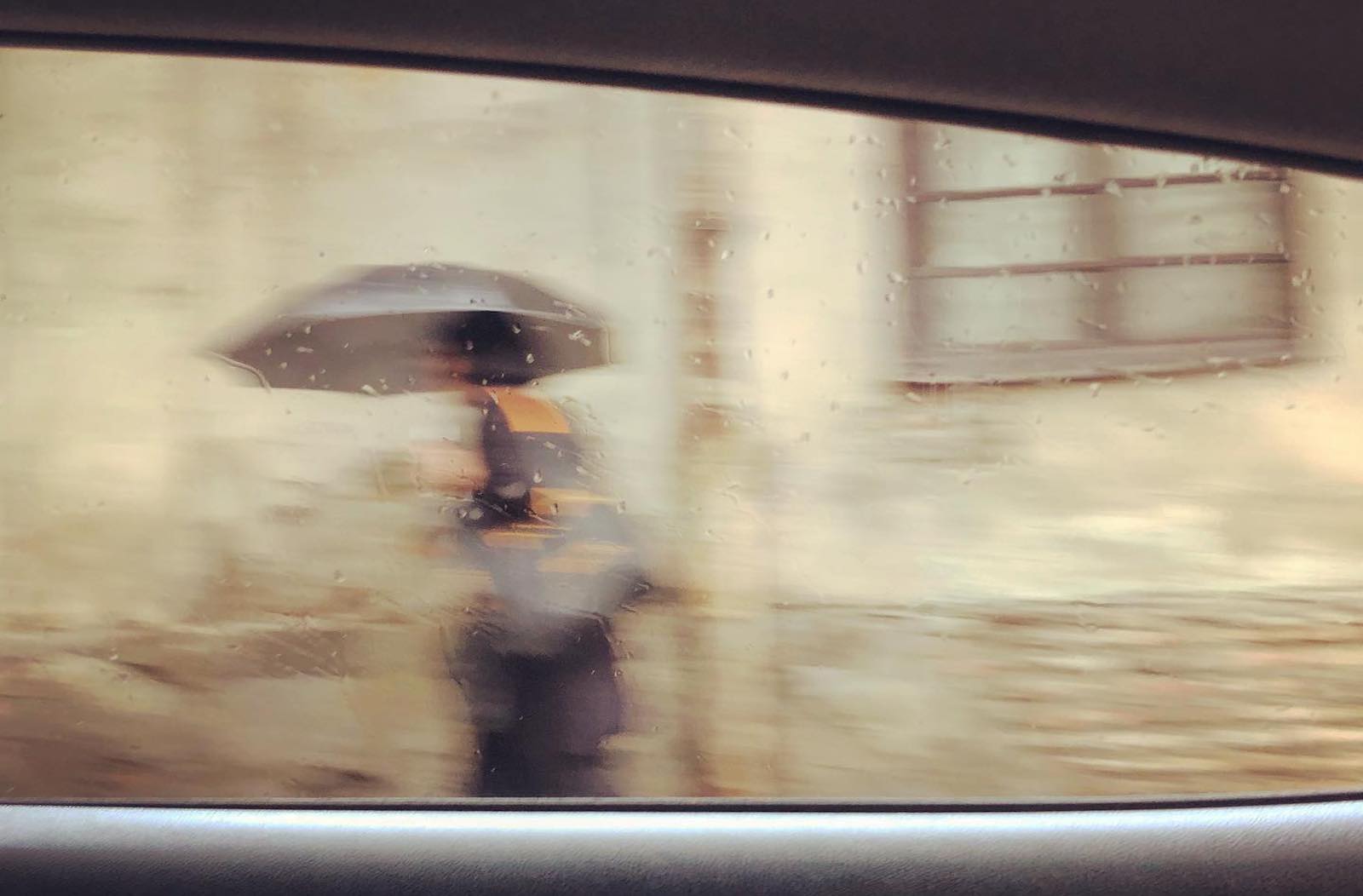
Tbilisi through the eyes of Tinatin Bregvadze
By Liza Tsitsishvili
Hi, Tinatin! Can you tell us about yourself?
Tinatin:
I’m Tinatin Bregvadze, born on August 6, 1980, which is probably why winter is so hard on me. I hold a Master’s degree in Geography and Governance, and for the past ten years, I’ve been involved in educational projects. I regret two things in life: not having a sibling and wasting so much time during my university years. From my first year, I started working as a geography teacher at my school, and it was amazing.
I now have a husband and two children, and if someone thinks that raising two boys isn’t one of the most respectable things in life, then we simply have nothing to talk about. I don’t have one defining talent, but I have many interests, so I’m never bored.
What about your work?
Tinatin:
I am currently the director of the Levan Mikeladze Diplomatic Training and Research Institute. In developed countries, diplomatic schools receive significant attention. Unfortunately, Georgia does not have a full-fledged academy for diplomats.
Georgia is a small country. Our democracy is still developing, we are not strong militarily, and we don’t have oil or gas. What we do have is human capital, and we must strengthen it to meet today’s challenges. Cooperation with partner countries is crucial in areas such as economics, culture, and politics. That’s why developing this institution should be one of our top priorities.
What motivates me most is the enormous potential for growth. No two days are the same. Our work includes creating, managing, and participating in intellectual, professional, and educational programs. We also communicate with people who have 30 years of experience shaping Georgia’s domestic and foreign policy. That knowledge is a treasure we cannot afford to lose.
I will consider myself successful only if I can contribute meaningfully to the development of this institution. Until then, there is still a lot to be done.
What is your main priority?
Tinatin:
It may sound unoriginal, but my main priority is creating an environment in which my children can be happy. However, a person who is not at peace with themselves cannot build such an environment. That’s why I try to fill every situation I’m in with positive energy and opportunities for personal and intellectual growth.
Recognizing your weaknesses and mistakes is essential. You can only become better than you were yesterday by admitting them and working through them.
Family or career?
Tinatin:
I believe it’s wrong to invest all your energy, emotions, or intellect in just one thing. Humans are multitasking by nature, and limiting ourselves to a single purpose is a loss. Whether male or female, a person can function effectively in multiple roles at once.
That said, if I were ever forced to choose, the answer would obviously be family.
How do you perceive Tbilisi?
Tinatin:
Reality is given, and in that sense, Tbilisi is the same for everyone. What differs is our attitude toward it. For me, Tbilisi is a logical and natural result of its history.
It is multifaceted, very European, marked by communism, civil war, survival struggles, and a strong desire for rapid development, visible in the rise of residential buildings in unsuitable places. I’ll be honest: Tbilisi has many ugly sides. But I believe it couldn’t have been otherwise, so I accept this reality calmly.
I love Tbilisi deeply and never wanted to live anywhere else. There is something unique about it that impresses foreigners, partly because the city’s and country’s development is so visibly dynamic.
What do you like and dislike about Tbilisi?
Tinatin:
In recent years, you see many different kinds of people in the streets, which I really like. I think it’s a sign of growing independence. Because of this diversity, the city now offers places for all kinds of people.
What I strongly dislike is the endless, thoughtless construction. It’s a leftover from old ways of thinking, when people believed that doing something wrong wouldn’t have consequences, or that minimal knowledge would somehow lead to good results. I believe this will change. Eventually, no one escapes consequences, and our care for the city will improve.
You have a hobby very different from your work. What does photography bring into your life?
Tinatin:
I’ve always liked capturing moments. At some point, I decided to take photography courses, thinking that learning techniques would make me a better photographer. On the first day, the teacher told us, “None of you will become a good photographer. You’ll take photos of landmarks and sunsets and be satisfied with that.” I thought, “What is he talking about? Just start the lesson.”
After two years of classes, I realized he was right. Photography is an extremely difficult profession. The technical side is much easier than the personal one. It requires immense effort and knowledge to convey meaning through light, form, color, and people, or to create entirely new concepts. That is real photography, and it demands a lifetime of dedication.
Is Tbilisi more beautiful in photographs or in real life?
Tinatin:
If you’re not lying to yourself or others, it’s the same in both. Your mood plays a huge role. My photography teacher used to say, “I can tell what mood you were in by looking at your photos.” He was right. Every image reflects our mood, attitude, intellect, fears, and courage. In that sense, Tbilisi, like anything else, can be seen from countless perspectives.
Where does Georgia stand on the world map?
Tinatin:
Georgia is part of European civilization. Period.
How do you imagine Georgia in 10 or 20 years?
Tinatin:
If you had asked me this question in 1999, I could never have imagined the opportunities and lifestyle we have today. Progress has been uneven and sometimes difficult, but it has become unstoppable. I believe that in 20 years, Georgia will experience positive changes that seem unimaginable now.
Translated by Ana Mikatadze

Guest Author
We're here to celebrate the spirit of our city and its dwellers and share their stories with visitors and amongst ourselves.
You May Also Like
Tea Purtseladze
February 17, 2020
Filmmaker Anuna Bukia
April 5, 2020